
EERC Horsemanship Library
This online resource is a curated collection of books, articles, blogs, podcasts, and videos that reflect our approach to ethical horsemanship, thoughtful rehabilitation, and purposeful riding. These resources are here to educate, inspire, and support both horses and humans on the journey from rescue to trusted partner.
Horsemanship & Training
How we communicate, build trust, and create second careers.
-
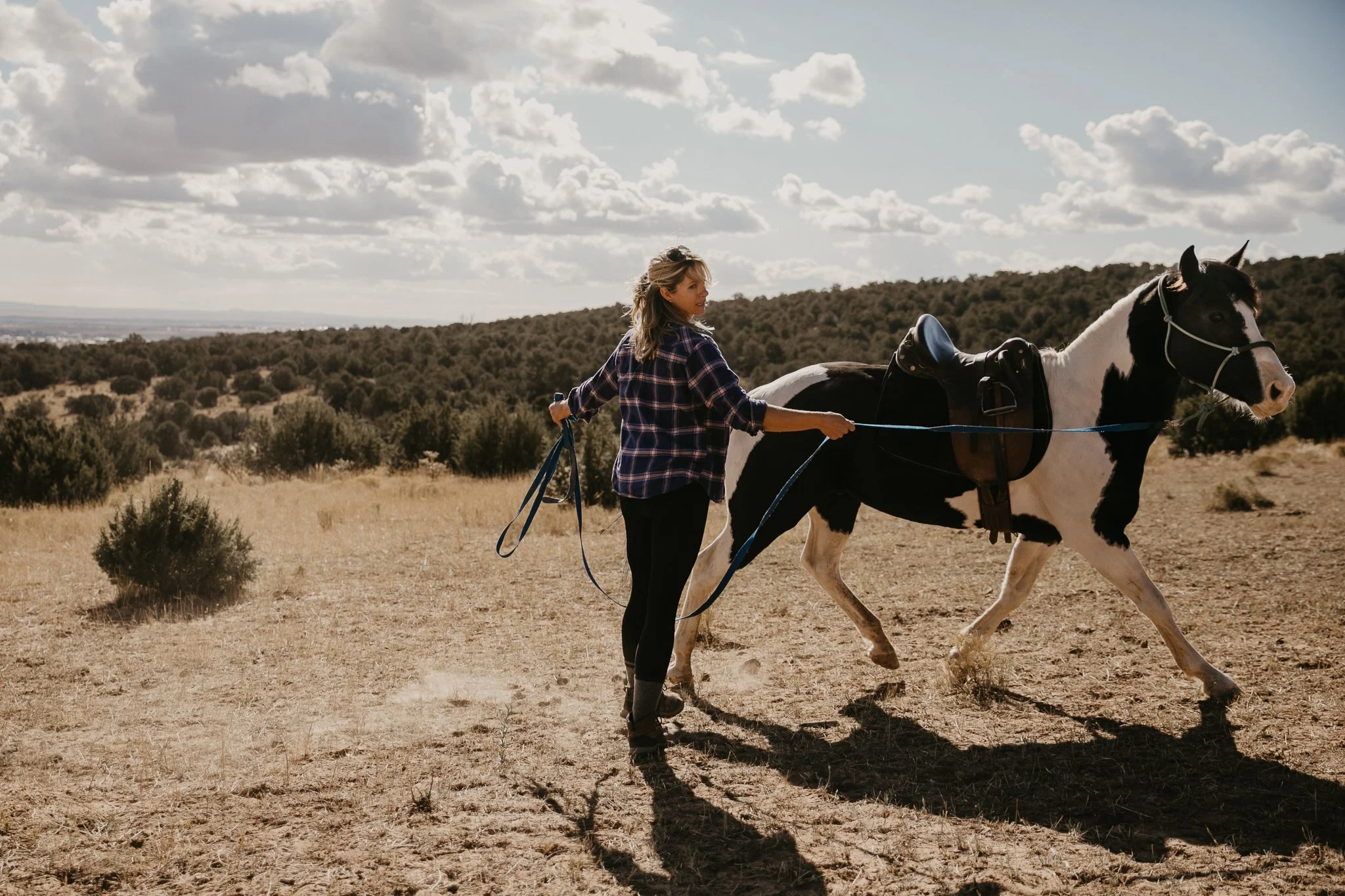
Clear groundwork builds trust and understanding before riding begins. Thoughtful communication on the ground creates a calm foundation for rehabilitated horses as they learn new roles.
-
Trail readiness reflects a horse’s confidence, soundness, and trust in real-world environments. Thoughtful development helps rehabilitated horses become reliable, adaptable partners with sustainable careers.
-
Many horses need time and clarity when stepping into a new role. Slow, individualized restarts reduce confusion, protect soundness, and rebuild confidence in both body and partnership.
-
Behavior is often a response to past experience, stress, or misunderstanding. By addressing root causes rather than symptoms, EERC helps horses develop emotional stability and predictable responses.
-
A rider’s balance and awareness directly affect how a horse moves and responds. Improving rider feel supports clearer communication, softer cues, and greater comfort for rehabilitated horses.
Mind–Body Connection (Horse & Human)
Where awareness, regulation, and partnership meet.
-
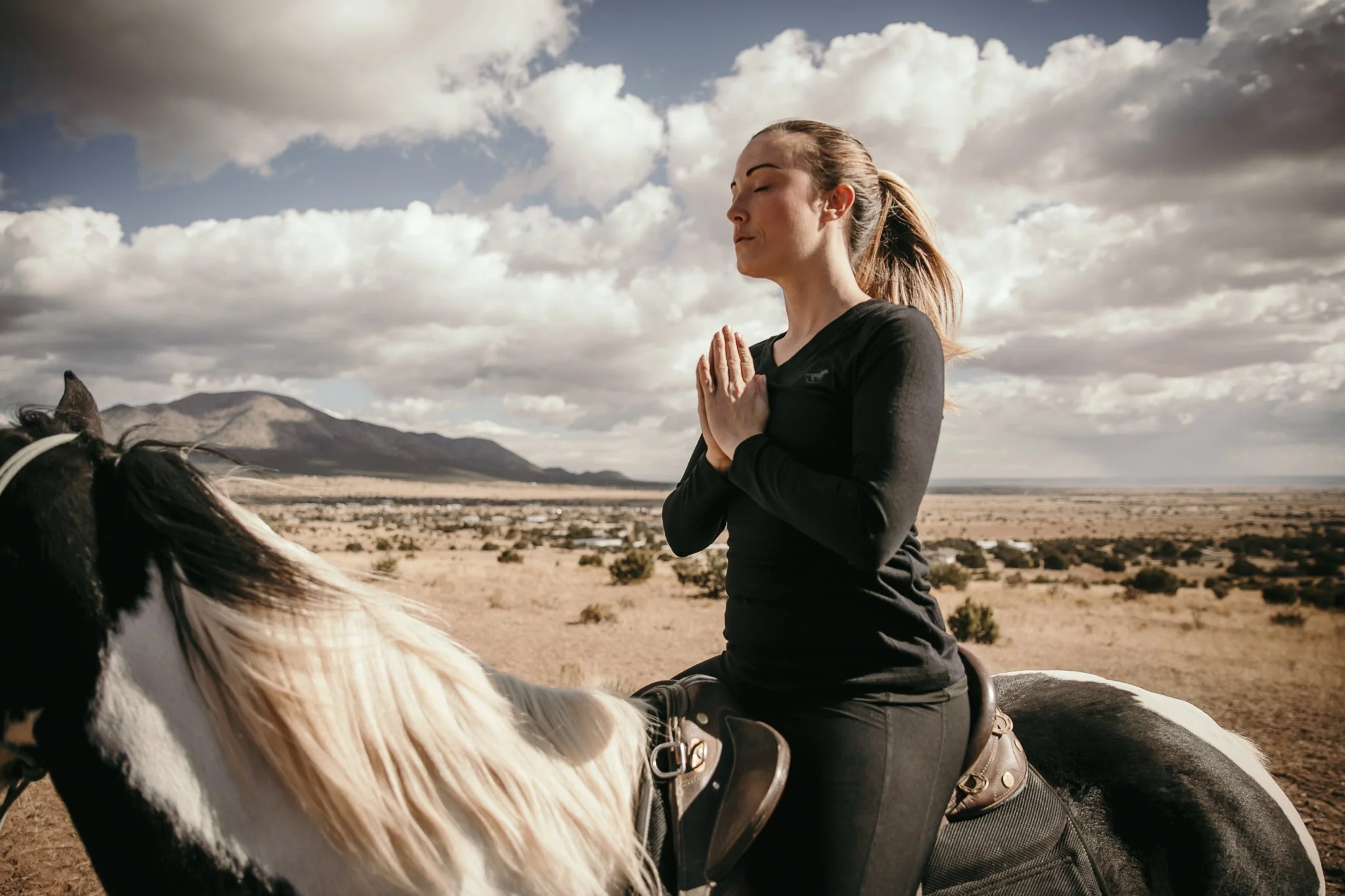
Body awareness improves communication and reduces unnecessary tension. This section explores how intentional movement benefits both horse and rider.
-
Breath influences balance, timing, and emotional response. These resources examine how regulating the nervous system improves partnership and clarity.
-
Past experiences shape present behavior. This section focuses on patient, respectful approaches that recognize stress and rebuild trust.
-
Awareness in the moment enhances feel and safety. These resources support cultivating focus, softness, and intentional communication.
-
Strength, mobility, and balance directly impact riding effectiveness. This section highlights sustainable practices that protect both rider and horse.
Voices from the Community
Learning from those doing the work.
-
Professionals whose work reflects clarity, ethics, and respect for the horse.
-
Experts who deepen understanding of soundness, movement, and whole-horse care.
-
Writers who contribute thoughtful perspectives on horsemanship, welfare, and training. With a few good horsey stories.
-
Shared insights that broaden perspective and encourage continued learning.
-
Conversations that explore horsemanship, rehabilitation, and the evolving equine world.
-
Films and documentaries can deepen understanding of horsemanship, rehabilitation, and the human–horse relationship. This section highlights visual storytelling that reflects values of patience, second chances, and ethical care.
Equine Health, Soundness & Physiology
Supporting the body so the horse can do the job.
-
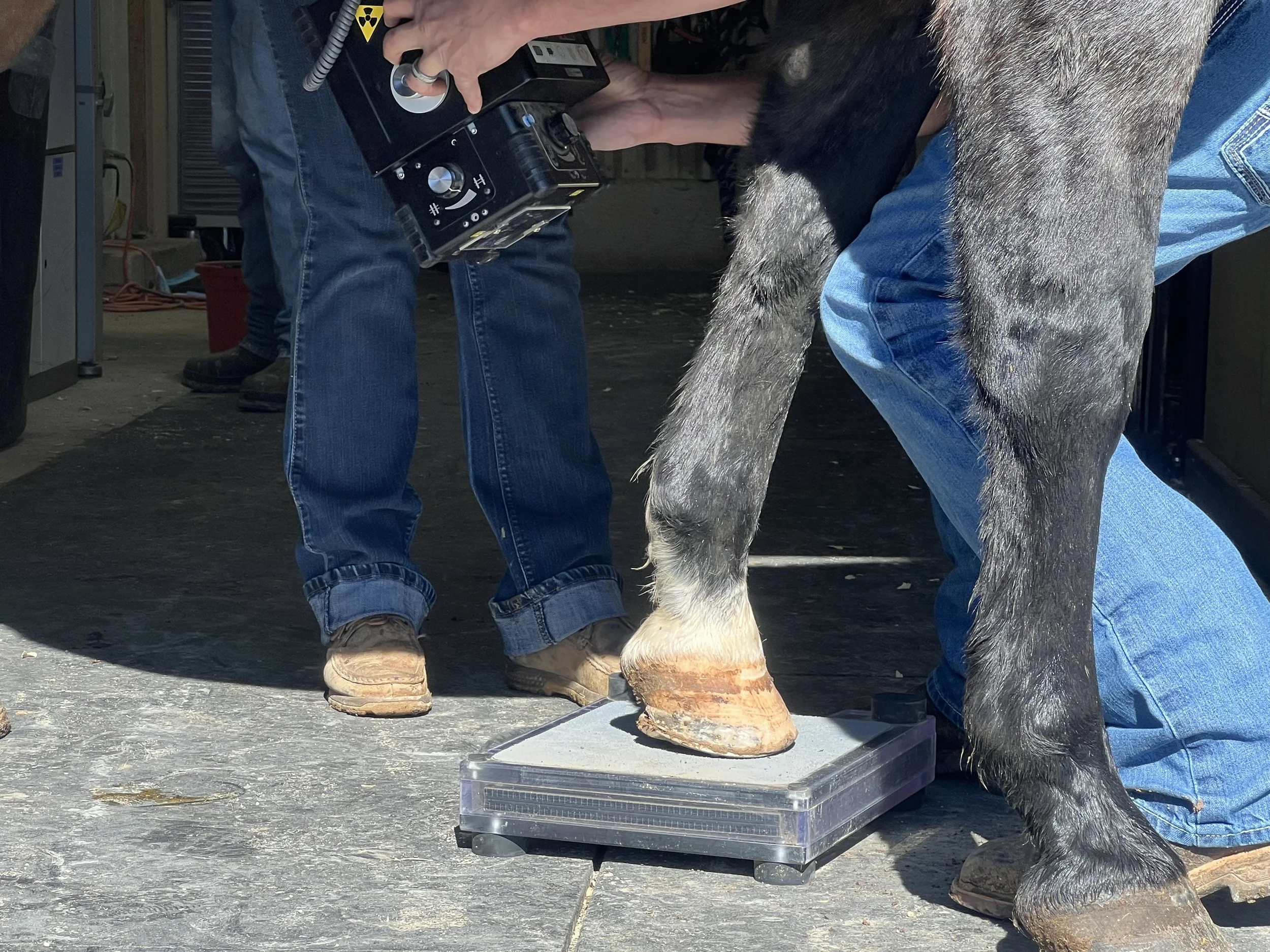
Understanding how the horse’s body moves and compensates is essential for soundness and longevity. This section explores structure, balance, and functional movement.
-
Rehabilitation requires patience, careful progression, and realistic expectations. These resources focus on recovery strategies that prioritize long-term comfort over quick return to work.
-
The hoof influences the entire body. This section highlights thoughtful trimming, shoeing, and management practices that support stability and soundness
-
Proper fit reduces discomfort and prevents compensatory strain. These resources emphasize evaluating equipment as part of overall horse welfare.
-
Feeding decisions directly affect energy, recovery, and long-term health. This section focuses on balanced nutrition that supports both rehabilitation and sustainable work.
Rescue, Rehab & Second Chances
The heart of EERC.
-
Every horse arrives with a history. These stories illustrate the patience and process behind thoughtful rehabilitation.
-
Recovery rarely follows a strict schedule. This section emphasizes realistic expectations and gradual progress.
-
Transitioning into a new role requires preparation and clarity. These resources explore how horses move from performance careers to dependable trail partners.
-
Responsible rescue extends beyond intake. This section focuses on thoughtful placement, transparency, and lifelong accountability.
-
Not every horse is suited for the same path after rehabilitation. This section explores the physical, mental, and environmental factors that help determine whether a horse is prepared for a sustainable and meaningful second career.
Care, Management & Lifestyle
Daily choices that create long-term wellness.
-
Daily feeding practices influence physical health and emotional stability. These resources explore practical, evidence-based approaches to equine nutrition.
-
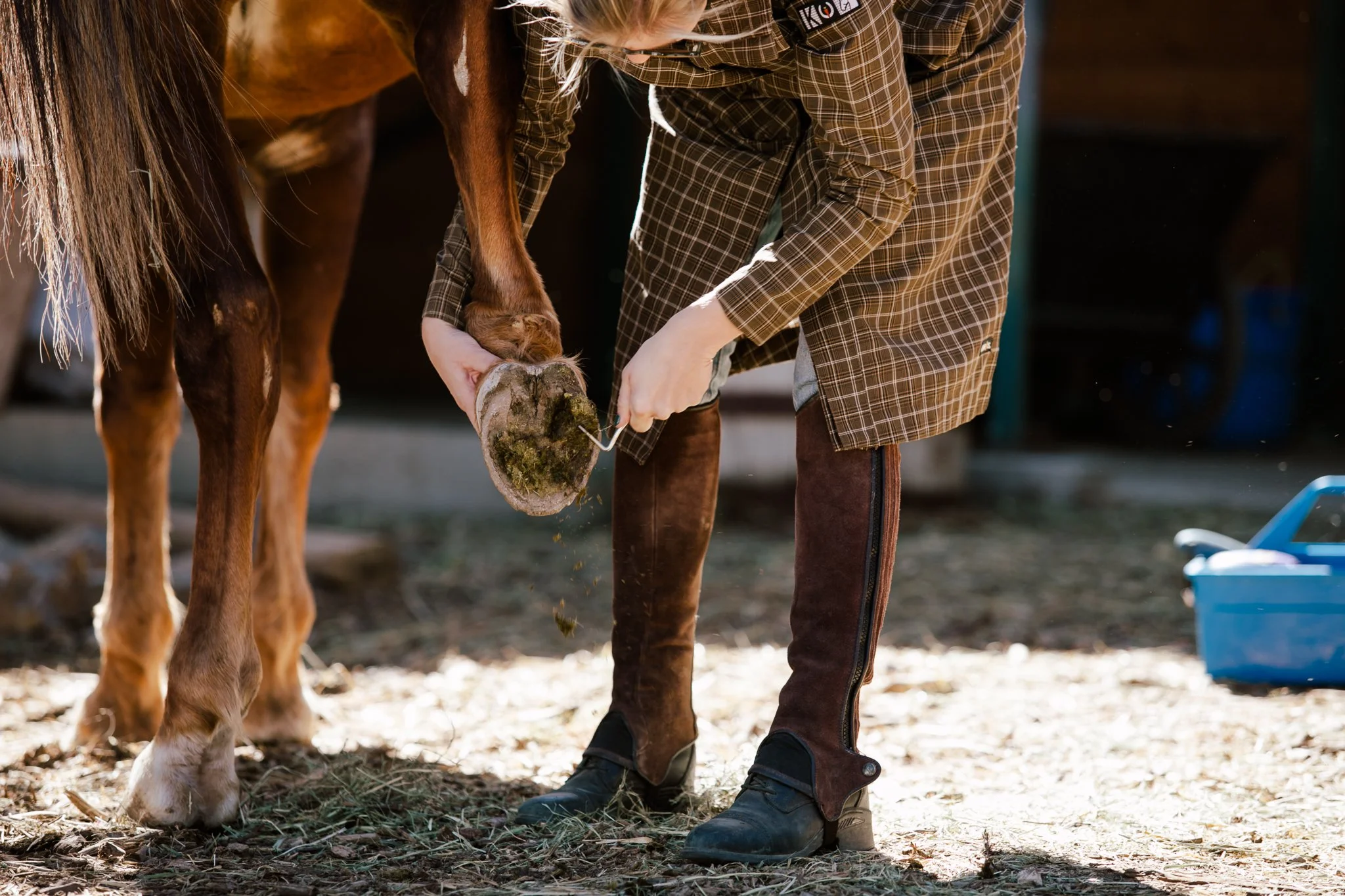
Environment shapes behavior and stress levels. This section examines how turnout, herd dynamics, and routine impact a horse’s well-being.
-
Aging horses require thoughtful adjustments in workload, diet, and management. These resources support comfort and dignity through later stages of life.
-
Weather and altitude affect conditioning, hydration, and recovery. This section offers guidance for maintaining health through seasonal changes.
-
Preparation reduces stress and injury during hauling or extended outings. These resources focus on conditioning, logistics, and safety for real-world riding.
Trails, Travel & Purposeful Riding
Where rehab meets real life.
-
Responsible rescue extends beyond intake. This section focuses on thoughtful placement, transparency, and lifelong accountability.
-
Building strength gradually protects joints and soft tissue. These resources explore conditioning strategies that support long-term durability.
-
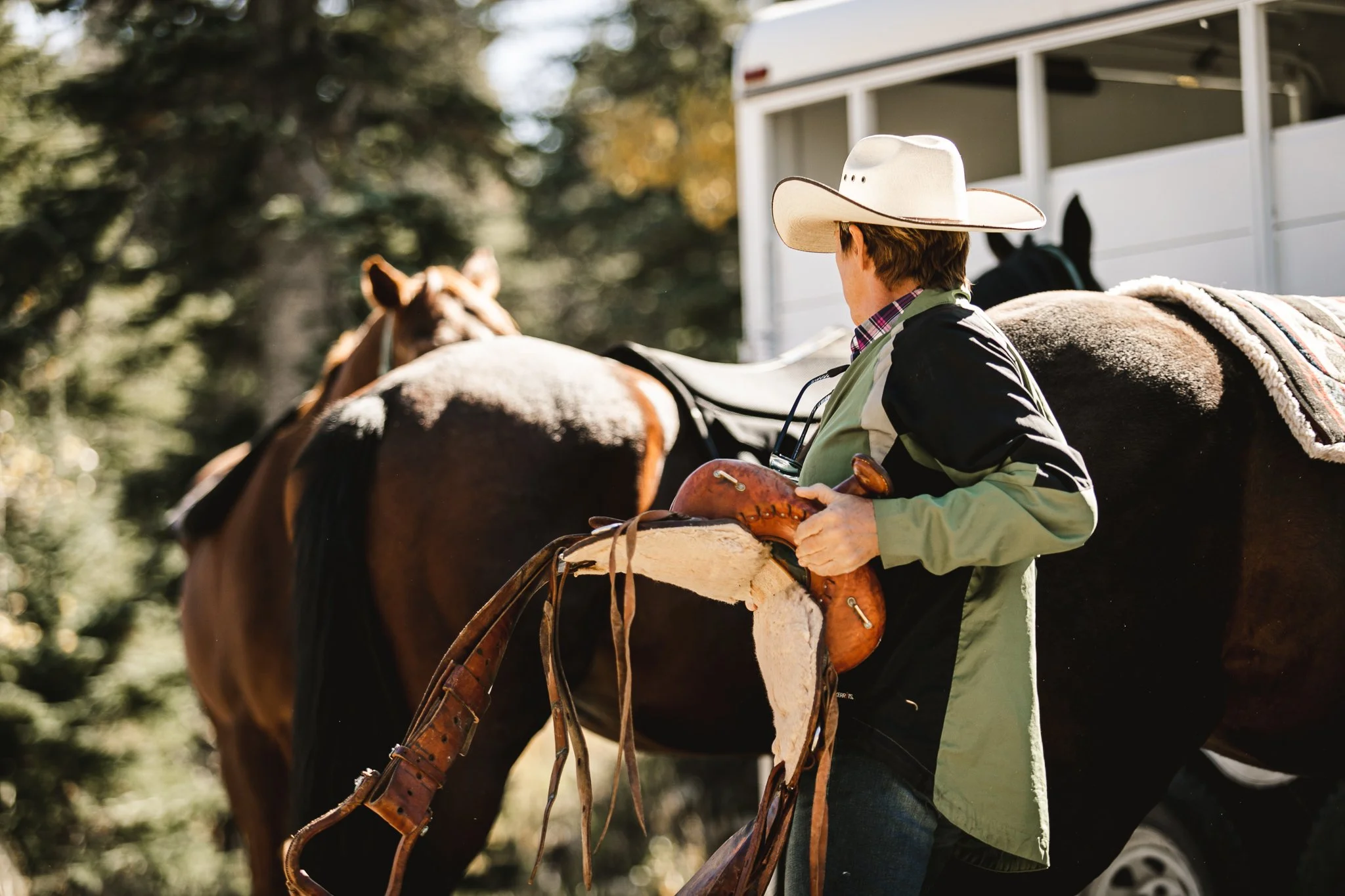
Preparation enhances both safety and enjoyment. This section covers planning, equipment, and situational awareness on the trail.
-
Purposeful riding values connection over speed or performance. These resources encourage mindful partnership in open spaces.
-
Trail access depends on responsible land use. This section highlights practices that protect shared landscapes for future riders.
Curated Learning Paths
New to Rescue Horses? Start Here
-
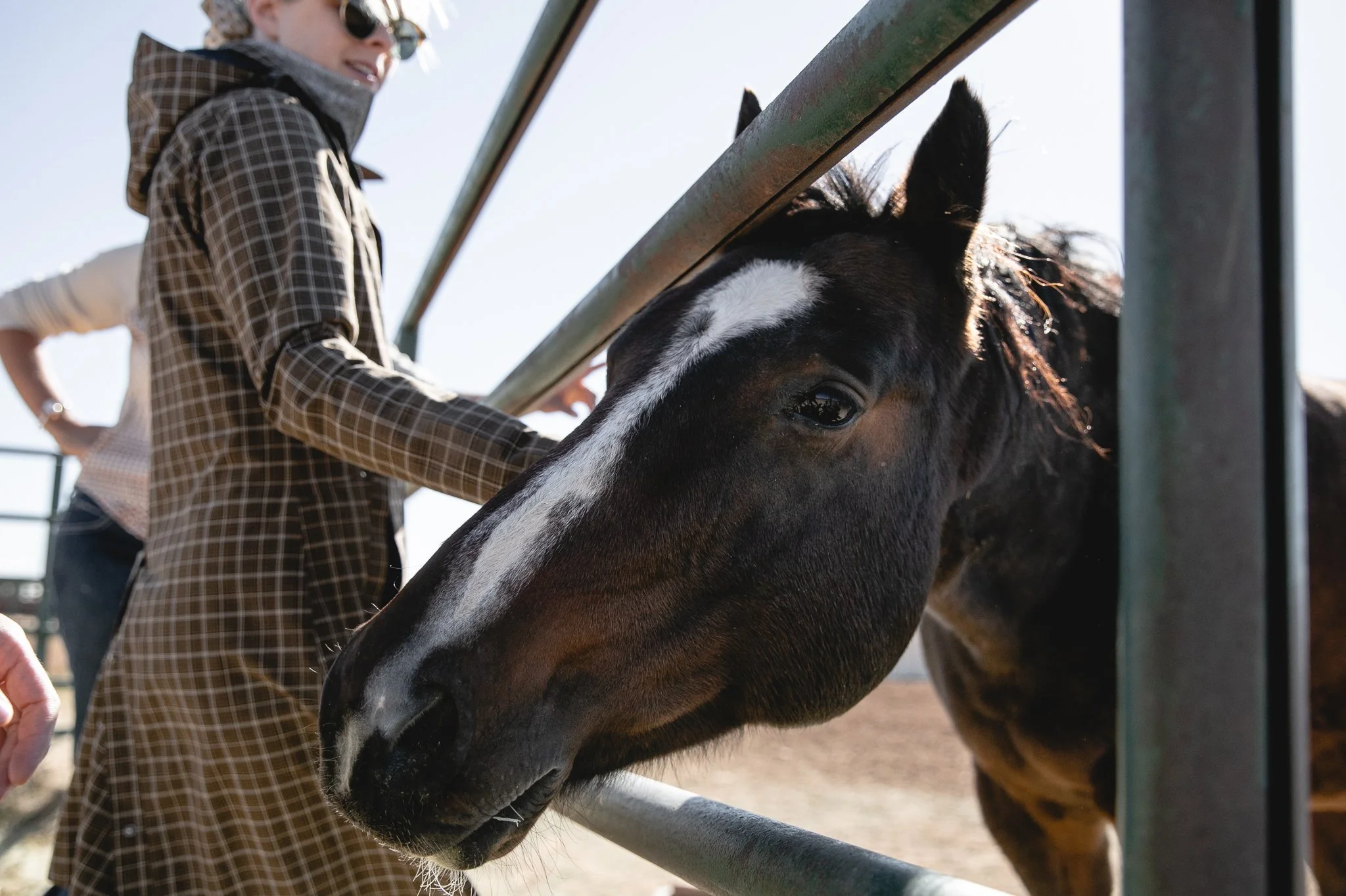
Rescue horses often carry physical and emotional stress from past experiences. Understanding how trauma affects behavior and trust is essential for ethical rehabilitation.
Start With:
📘Evidence-Based Horsemanship – By Martin Black and Dr. Stephen Peters. : This is the bridge between horse training and neuroscience. It explains how trauma lives in the horse's brain (specifically the amygdala) and why "punishing" a trauma-based response is neurologically counterproductive. It teaches you to differentiate between a horse that is "being bad" and a horse that is in a state of autonomic nervous system collapse or "shutdown."🎧 The Journey On Podcast: Episode 23 – Dr. Stephen Peters :A clear introduction: In this deep-dive interview, Warwick Schiller and Dr. Peters discuss the "neuro-chemical cocktail" of fear. They break down the science of memory in horses and how to create a "safe" environment that allows a traumatized horse to move out of survival mode and back into a learning state.
🎥 The Wild Horse Redemption (Trailer/Excerpts): This film provides a raw look at the mirror between human trauma and equine fear. By watching inmates work with "unhandled" and often defensive wild mustangs, you see the visual cues of a horse shifting from hyper-vigilance (high head, flared nostrils, white of the eye) to the first moment of "letting down"—a deep breath, a lick, and a chew.Visual perspective
Explore the full Trauma & Behavior section →
-
Rehabilitating a horse requires a shift from "calendar-based" goals to "tissue-based" reality. This foundational set helps you manage expectations while respecting the biological timeline of healing.
Start With:
📘101 Dressage Exercises for Horse & Rider — By Jec Aristotle Ballou :While not a medical text, this is the gold standard for "re-muscling" a horse correctly. It provides the low-impact, symmetrical movements necessary to stabilize a horse’s core and joints during the "return to work" phase. It emphasizes that building postural strength takes months, not weeks, to prevent compensatory injuries.
🎧 The Humble Hoof: Episode 58 – Rehab and Movement with Dr. Hilary Clayton: A clear introduction: Dr. Clayton is a world-renowned expert in equine biomechanics. In this episode, she breaks down the actual science of tissue repair—explaining why a horse might look sound at the walk long before their tendons or ligaments are structurally ready for the "loading" forces of a trot or canter.
🎥 Horses & The Science of Harmony (Excerpts) : This film uses advanced imagery and slow-motion analysis to show the subtle "micro-compensations" horses make when they aren't fully healed. It provides a visual guide for riders to spot the difference between true soundness and a horse that is simply "holding" its body to protect an old injury.
Explore the full Realistic Rehab Timeline section section →
-
Finding a second career isn't just about what a horse can do, but what their temperament and physical history allow them to enjoy. This selection focuses on the "matching" process required for a successful transition.
Start with:
📘Beyond the Track: Retraining the Thoroughbred — By Anna Ford: While focused on racehorses, its evaluation system is the gold standard for any horse in transition. It teaches you to look past the "current" athlete to see the underlying conformation and temperament. It emphasizes that a "good" second career is one where the horse’s natural aptitude (e.g., a high-energy horse moving to endurance vs. a steady horse moving to therapy) matches the new job’s demands.
🎧Retraining the Racehorse: Choosing the Right Second Career: This episode features scouts and trainers who discuss the "vocation" mindset. They break down how to "interview" a horse for a new role—testing for things like spook-recovery, spatial awareness, and "work ethic"—to ensure the horse isn't being forced into a career that causes chronic mental stress.
🎥 The Second Career (Excerpts/Profiles): This film provides a visual "before and after" of horses transitioning from high-intensity sports to roles in Equine Assisted Therapy and Western Dressage. It highlights the physical signs of a horse that has successfully "downshifted"—showing the softening of the topline and the shift from "reactive" eyes to a "connected" expression.
Explore the full Good Second Career section section →
Building a Trustworthy Trail Horse
-
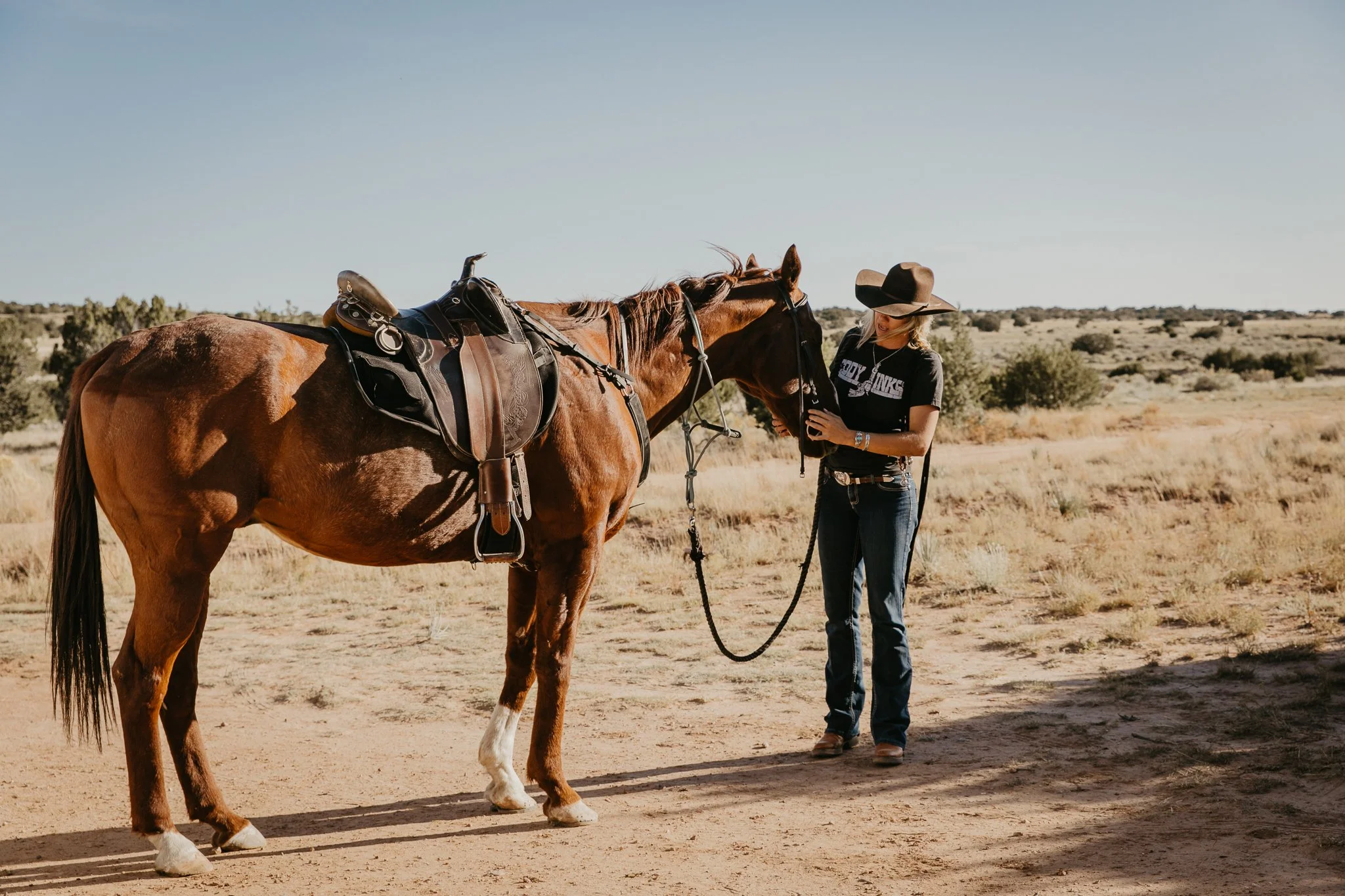
Groundwork is often treated as an arena-only exercise, but for the trail or endurance rider, it is the "pre-flight check" that ensures your horse is safe to mount in a chaotic environment.
Start With:
📘 Groundwork: The First 500 Miles — By Aarene Storms: This book strips away the "fancy" patterns and focuses on the high-stakes logistics of distance riding. It teaches the specific ground skills required for real-world survival: standing motionless for mounting on a cliffside, "ponying" a second horse through tight timber, and remaining calm while a vet handles every inch of their body during a metabolic check.
🎧 The Trail Ride Podcast: Groundwork for Trail Success: This episode features professional guides discussing why a "broke" arena horse often falls apart on the trail. It introduces the concept of "The Bubble," teaching you how to use ground cues to move a horse's hindquarters away from a yellowjacket nest or back them out of a boggy dead-end before you ever get in the saddle.
🎥 7 Clinics with Buck Brannaman: Groundwork (Excerpts): This footage provides the ultimate visual on "Leading with Intention." You see the difference between a horse that is simply "following" and a horse that is "with" the human. It illustrates how the slack in the lead rope is a direct indicator of the horse's mental state—crucial for spotting a "spook" before it happens in the backcountry
Explore the full Groundwork section →
-
Conditioning a trail horse is about more than just "miles"—it is the deliberate process of hardening the bone, strengthening the tendons, and building the aerobic capacity needed to navigate varied terrain safely.
Start With:
📘Go the Distance: The Complete Resource for Endurance Horses — By Nancy S. Loving, DVM l: This is the physiological blueprint for any horse heading into the backcountry. Dr. Loving explains the "Long Slow Distance" (LSD) method, which focuses on building a base of metabolic efficiency and structural integrity over months. It teaches you how to monitor heart rate, hydration, and "gut sounds" to ensure your horse is never over-faced by the trail.
🎧 Endurance Ride: Conditioning and Vet Checks with Dr. Nancy Loving: This episode breaks down the "Metabolic Pull"—why horses tire differently on a trail versus an arena. It introduces the "Fit to Continue" mindset, teaching riders how to assess their horse’s recovery at a walk and why "cardiovascular fitness" often develops faster than "skeletal strength," leading to a high risk of injury if not managed.
🎥 Documentary Clip: The Tevis Cup: 100 Miles in One Day (Excerpts): This footage provides a stark visual on "Terrain Conditioning."You see horses navigating vertical climbs and rocky descents, illustrating why hill work is a non-negotiable part of a trail program. It showcases the physical "look" of a conditioned horse—defined muscle without bulk—and the calm, efficient movement of a horse that has been seasoned for the long haul.
Explore the full Conditioning section →
-
Developing "feel" isn't a destination; it’s a commitment to being the same partner for your horse every time you sit in the saddle. This selection focuses on the mental and physical discipline required to ride with true awareness.
Start With:
📘 Centered Riding — By Sally Swift: This is the ultimate manual for rider self-awareness. Swift’s "Four Basics" (Soft Eyes, Breathing, Centering, and Building Blocks) teach you how to become aware of your own imbalances before they translate into tension for your horse. It is foundational because it proves that a "consistent" horse starts with a rider who has consistent control over their own anatomy and energy.
🎧 The Journey On Podcast: Episode 4 – Awareness: Warwick Schiller breaks down the difference between "paying attention" and "being aware." He discusses how horses are hyper-tuned to our consistency—or lack thereof. This episode serves as an introductory guide to "listening" to the subtle feedback your horse gives you and how to adjust your intent (not just your aids) to maintain a steady conversation.
🎥 Documentary Clip: Horses & The Science of Harmony (Excerpts): This film provides a high-tech visual on Rider Biomechanics. Using pressure-sensing saddle pads and skeletal overlays, it shows exactly how a rider’s slight loss of consistency—like a collapsing hip or a braced rein—impacts the horse’s ability to move freely. It’s a powerful visual reminder that "feel" is a physical reality that can be measured and refined.
Explore the full Rider Awareness section →
The Mind–Body Connection
-
Breath is the most direct communication line between your nervous system and your horse’s. These resources move beyond "remembering to breathe" and into the technical application of respiration as a performance and safety tool.
Start With:
📘 Centered Riding — By Sally Swift: Swift identifies "Breathing" as one of her "Four Basics." She explains that holding your breath creates a "dead weight" that a horse must carry, while deep, diaphragmatic breathing lowers your center of gravity. This book is foundational because it teaches you that your breath isn't just for oxygen—it is a physical aid that tells your horse whether to be "on alert" or "at ease."
🎧 The Journey On Podcast: Episode 21 – Breathing and the Nervous System: Warwick Schiller discusses the "co-regulation" that happens between horse and rider. He provides a clear introduction to how Box Breathing and Exhalation Cues can physically signal a horse’s nervous system to shift from sympathetic (fight/flight) to parasympathetic (rest/digest). It is a masterclass in using your lungs to settle a "spooky" mind.
🎥 : The Path of the Horse (Excerpts): This film offers a beautiful visual on the "silent conversation." In specific clips, you can see the visible "release" in a horse—a lowering of the poll, a deep sigh—the exact moment the rider consciously alters their breathing pattern. it provides a visual "proof of concept" that your breath is the most powerful tool in your invisible toolkit.
Explore the full Breathwork section →
-
To ride with a truly "safe" horse, you must first become a safe anchor. This selection focuses on the science of Co-Regulation—the biological process where a horse’s nervous system mirrors your own.
Start With:
📘 Zen Mind, Zen Horse: The Science and Spirituality of Working with Horses — By Allan Hamilton, MD: Written by a neurosurgeon and horseman, this book explains the "brain-to-brain" connection. It is foundational because it treats the rider’s nervous system as a physical aid. Hamilton explores how limbic resonance works—if your heart rate is spiked and your amygdala is "firing," your horse’s survival instincts will naturally trigger, regardless of how many "cues" you give.
🎧 The Journey On Podcast: Episode 28 – The Polyvagal Theory with Dr. Stephen Porges: Dr. Porges is the founder of Polyvagal Theory, the science of safety and social connection. This episode provides a clear introduction to the "Hierarchy of Response." It teaches riders how to identify when they (or their horse) have slipped from "Social Engagement" into "Fight/Flight" or "Freeze," and how to use self-regulation to climb back up the ladder.
🎥 Buck: The Film (Excerpts/The 'Mirror' Concept): This film provides a stark visual on the "Nervous System Mirror." In several clips, you can see a horse’s anxiety escalate purely in response to a human's suppressed tension or "predatory" energy. It serves as a visual guide to the moment a human consciously "drops" their internal pressure, and the immediate, visible softening of the horse’s eye and topline that follows
Explore the full Nervous System section →
-
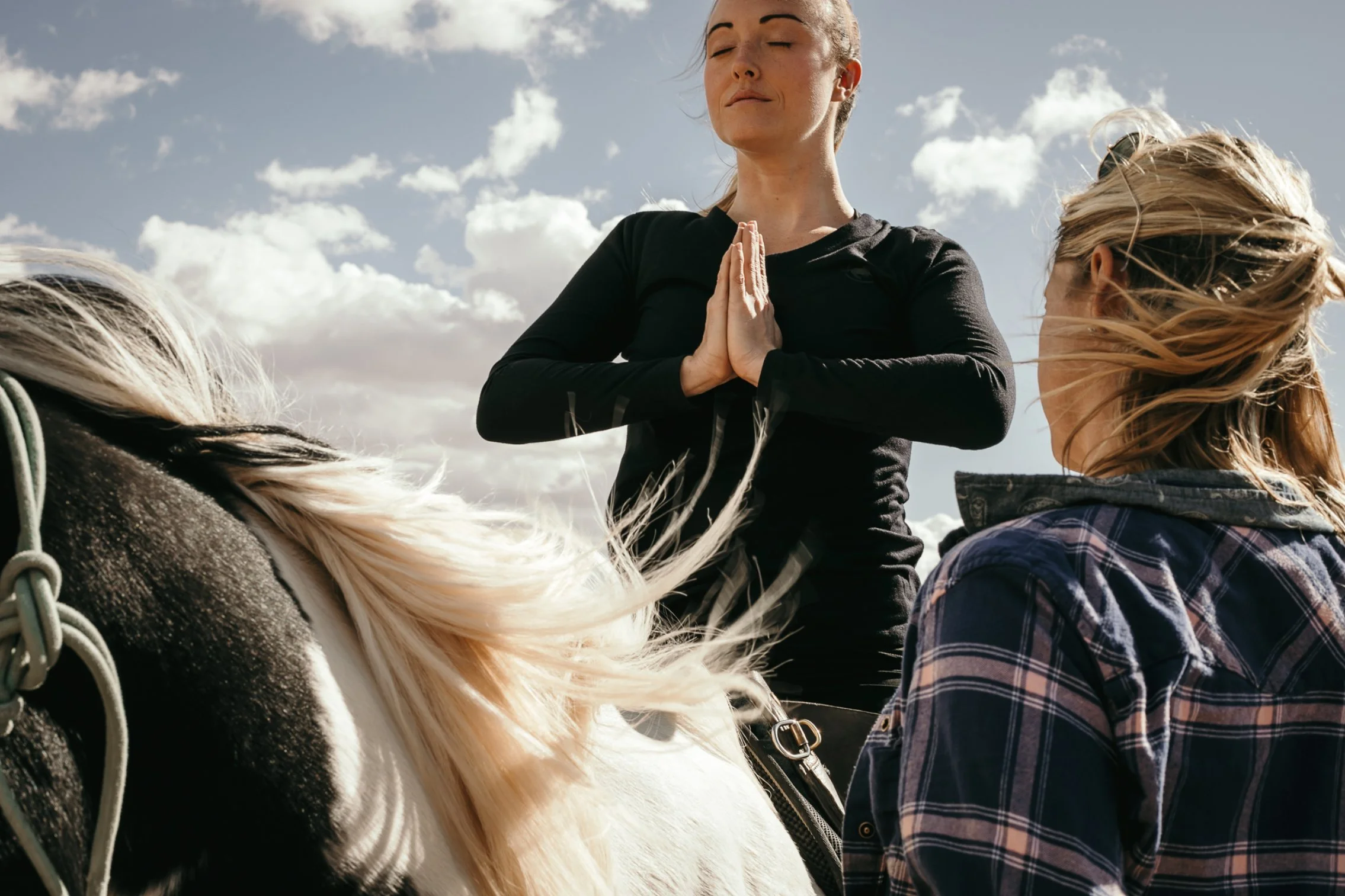
EquiYoga is the intentional fusion of Hatha yoga principles and classical horsemanship. It focuses on the symmetry, core stability, and mental stillness required for both horse and rider to move as a single, balanced organism.
Start With:
📘 Yoga for Riders: Trainers, Tips, and Exercises to Improve Your Riding — By Cathy Woods: This is the definitive manual for "The Yoga of Horsemanship." Cathy Woods breaks down how specific yoga postures (asanas) off the horse translate directly to a more fluid, non-interfering seat in the saddle. It is foundational because it treats yoga as a functional training tool for the equestrian, focusing on hip mobility, spinal alignment, and the "quiet mind" necessary for subtle communication.
🎧 The Feedback Loop: Episode 12 – Yoga, Breath, and the Balanced Seat: This episode provides a clear introduction to the "Bio-Symmetry" between horse and rider. It explores how a rider's "stuck" energy or physical tightness creates a "block" in the horse's movement. It introduces the concept of using yoga-based body scans while mounted to identify tension before it becomes a behavioral issue.
🎥 Horses & The Science of Harmony (Excerpts/Rider Mobility): This film offers a high-tech visual on the "Centaur Effect."Using 3D motion capture, it illustrates the exact moment a rider’s yoga-trained core engages to stabilize the horse’s topline. You can visually see the horse’s stride lengthen and their back lift as the rider adopts a "yoga-centered" posture—providing a powerful visual proof that a flexible, strong rider creates a flexible, strong horse.
Explore the full EquiYoga section →
Every resource in this library reflects EERC’s commitment to ethical horsemanship, thoughtful rehabilitation, and riding with purpose. Learning is part of how we care for the horse, the human, and the journey they share.
This library grows through shared knowledge.
If there’s a resource you believe would benefit our horses and community, we’d love to hear about it.