
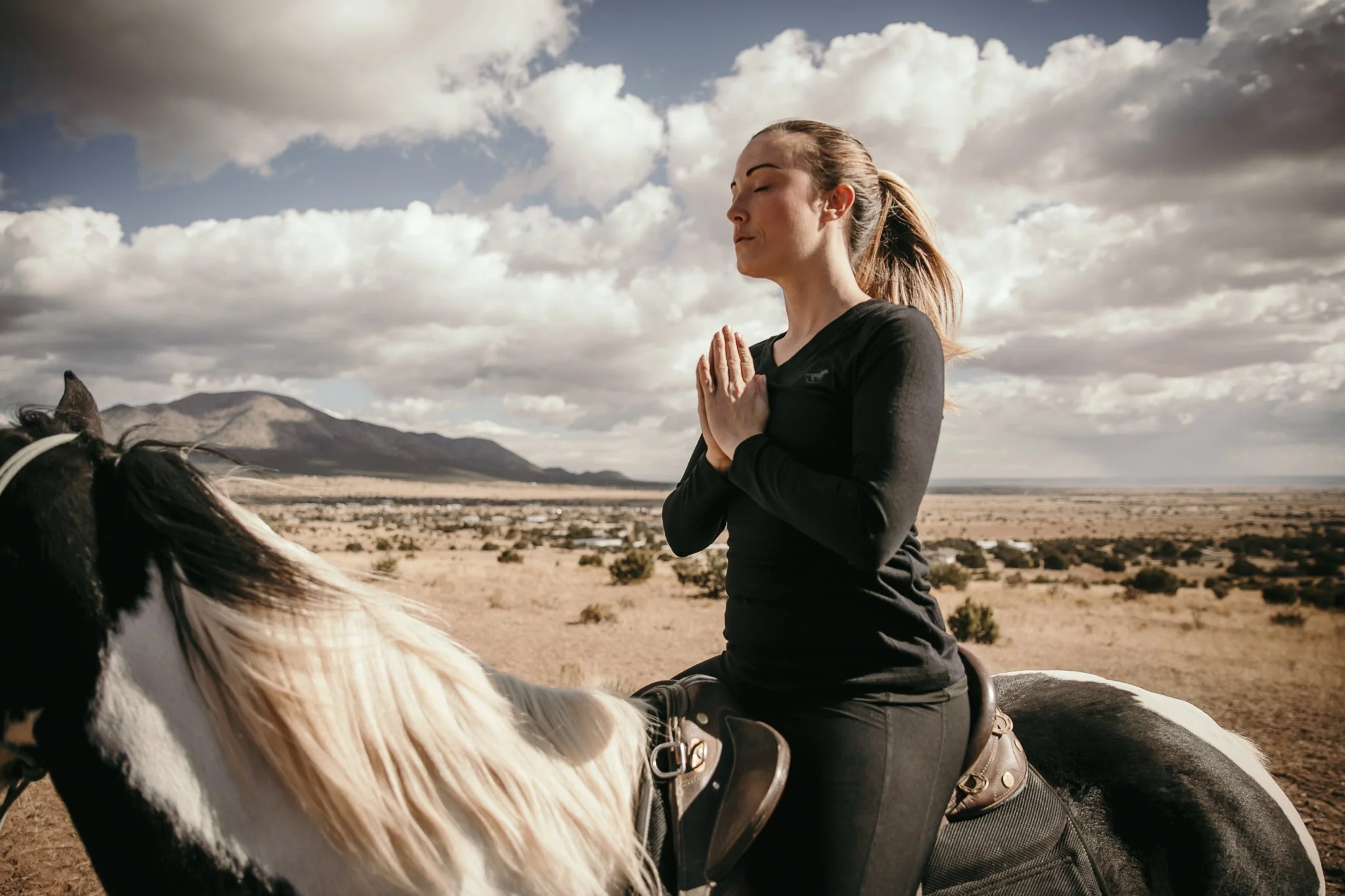
Mind–Body Connection (Horse & Human)
At EERC, we recognize that movement, behavior, and communication are deeply influenced by the nervous system—both in horses and in the humans who work with them. Many rehabilitation challenges are not solely physical, but rooted in stress, tension, or past experiences. This section explores the mind–body connection through breath, awareness, and regulation, offering tools that support clarity, relaxation, and mutual understanding. By improving how riders and handlers show up in their own bodies, we create safer, more trusting partnerships for the horse.
EquiYoga & Body Awareness
📘Yoga for Riders by Cathy Woods: A foundational guide that applies yoga postures and breathing specifically to the equestrian, focusing on opening the hips and quieting the mind before mounting.
📘Centered Riding by Sally Swift: The "gold standard" for mind-body awareness, utilizing visualization (like "soft eyes" and "building blocks") to achieve effortless balance.
📘The Rider’s Guide to Yoga by Kat Fuentes: Provides illustrated sequences that can be done in the stable or in the saddle to improve core stability and pelvic mobility.
📘Yoga for Equestrians: A New Path to Good Horsemanship by Linda Benedik and Medora Hebert: A seminal work that bridges the gap between classical equitation and Hatha yoga. It provides specific "un-mounted" and "mounted" exercises designed to improve a rider's dynamic balance, core strength, and ability to mirror the horse's rhythm.
✍️EquiYoga: Mindfulness in Motion: Cathy Woods’ blog offers tips on meditation for equestrians and using yoga to dissolve the "performance anxiety" that horses often pick up.
✍️The Dressage Radio Show: Rider Biomechanics Blog: Frequently features articles on how yoga-based stretching improves the independent seat and aids.
✍️Sustainable Soft Tissue: The Rider’s Fascia: A technical look at how fascial restrictions in the rider’s body (like tight hip flexors) create "noise" in the communication with the horse.
✍️Yoga for Equestrians (The Horse): Provides research-backed benefits of flexibility training for reducing rider-related back pain in horses.
🎧The Confident Rider Podcast: Jane Pike discusses the nervous system's role in riding, blending movement therapy with psychological awareness.
🎧The Journey On: Mindfulness Episodes: Warwick Schiller explores the "internal state" of the rider and how being present in your own body is the ultimate groundwork tool.
🎧The Whole Horse: Yoga & Bodywork: Features interviews with equine osteopaths and yoga teachers on the symbiotic relationship between human and horse posture.
🎥EquiYoga with Cathy Woods: A comprehensive video program that guides riders through "mat-to-saddle" transitions to improve symmetry and feel.
🎥Rider Awareness (Equitopia): A visual series using pressure-mapping technology to show how a rider’s mental tension or physical stiffness changes the horse’s stride.
🎥Yoga for Riders: 15-Minute Daily Flow: A digital series focusing on hip mobility and core engagement specifically for the equestrian body.
🤍 Why EERC Emphasizes This
To master EquiYoga and Rider Awareness, you must integrate the principles of hatha yoga with equine biomechanics. These resources focus on developing a "neutral spine," independent seat, and the mindful presence required to mirror your horse's relaxation.
Breathwork & Nervous System Regulation
📘The Breath of Life: Breathing for the Equestrian by Lynn Russell: A deep dive into the mechanics of breathing and how changing your respiratory rhythm can instantly lower a horse's cortisol levels.
📘Evidence-Based Horsemanship by Martin Black and Dr. Stephen Peters: While focused on the horse, it explains the neurobiology of the "Polyvagal Theory" and how human-horse nervous systems interact.
📘Horse Speak: The Equine-Human Translation Guide by Sharon Wilsie: Teaches how to use "breath-snorting" and soft exhalations as a primary vocabulary for greeting and calming horses.
📘The Fearless Horse by Annie Lawrence: Focuses on the psychological regulation of both horse and rider during high-stress encounters, using breathing as an anchor.
✍️Warwick Schiller: The Importance of Attunement: Explores how self-regulation is the prerequisite for any successful training session, focusing on "becoming a safe place" for the horse.
✍️The Willing Equine: Threshold Management: Articles on recognizing physiological signs of stress (like breath-holding) in both species before they lead to a "flight" response.
✍️Jane Pike: Nervous System Awareness: A blog dedicated to somatic experiencingfor riders, explaining how to shift from "fight or flight" to "rest and digest."
✍️HeartMath Institute: The Horse-Human Connection: Research articles on heart-rate variability (HRV) and how horses synchronize their heart rhythms with calm humans.
🎧The Journey On Podcast: Warwick Schiller’s episodes on meditation and breathwork are essential for riders looking to overcome "performance blocks" and anxiety.
🎧The Confident Rider Podcast: Jane Pike discusses vagus nerve stimulation and practical breathing exercises you can use while mounted to stay present.
🎧The Whole Horse Podcast: Often features equine therapists who discuss the energetic impact of a rider’s internal "frequency" on the horse’s behavior.
🎥Rider Awareness: The Breath (Equitopia): A visual series that shows how holding your breath creates immediate physical tension in the horse's back and poll.
🎥The TRT Method: Managing Stress: Tristan Tucker’s course teaches horses to self-regulate, but emphasizes that the rider must lead with a regulated nervous system first.
🎥The Path of the Horse: A documentary that explores the spiritual and physiological resonance between the human heart and the equine soul.
🤍 Why EERC Emphasizes This
To master the "internal state" required for high-level horsemanship, you must regulate your own autonomic nervous system. Because horses are masters of co-regulation, your breath and heart rate act as a direct remote control for your horse's level of arousal.
Trauma-Informed Horsemanship
📘Evidence-Based Horsemanship by Martin Black and Dr. Stephen Peters: A foundational text that explains the neurobiology of trauma and how chronic stress physically alters the equine brain’s ability to learn.
📘Horse Speak: The Equine-Human Translation Guide by Sharon Wilsie: Focuses on non-predatory communication, helping traumatized horses feel seen and understood through subtle body language "conversations."
📘The Fearless Horse by Annie Lawrence: Provides a framework for rehabilitating the fearful horse by respecting their thresholds and using systematic desensitization.
📘The Soul of a Horse by Joe Camp: While a narrative, it emphasizes choice and liberty, which are core tenets of trauma-informed care for horses transitioning from abusive or high-stress backgrounds.
✍️The Willing Equine: Trauma and Choice: A leader in consent-based training, this blog offers deep dives into how "agency" (giving the horse a choice) is the antidote to learned helplessness.
✍️Warwick Schiller: Performance Horsemanship Blog: Features articles on "attunement" and "dismantling the ego," essential for working with horses that have a history of shut-down behavior.
✍️Equusology: The Ethics of Training: Explores the psychological impact of traditional training methods and how to transition to more empathetic, science-backed protocols.
✍️Natural Lifemanship: Trauma-Informed Equine Assisted Learning: Provides resources on the Principles of Relationship, focusing on how both human and horse trauma intersect and heal together.
🎧The Journey On Podcast: Warwick Schiller frequently interviews experts on somatic experiencing and trauma recovery, applying these human concepts directly to equine rehabilitation.
🎧The Feedback Loop: Explores the two-way conversation required to help a horse move out of a "freeze" state and back into a state of social engagement.
🎧The Confident Rider Podcast: Jane Pike discusses nervous system regulation and how a rider’s past trauma can unintentionally trigger a horse's defensive mechanisms.
🎧The Whole Horse Podcast: Features episodes on equine craniosacral therapy and osteopathy as tools for releasing "stored" physical trauma in the fascia.
🎥The Path of the Horse: A documentary that explores the healing power of horses and the importance of a relationship based on mutual respect rather than dominance.
🎥Equitopia: Understanding Fear and Anxiety: A video series that visually demonstrates the subtle signs of a shut-down horse and how to begin the "thawing" process.
🎥TRT Method: The Mentally Balanced Horse: Tristan Tucker’s course focuses on giving horses the tools to manage their own stress, which is vital for horses with a history of unpredictable environments.
🤍 Why EERC Emphasizes This
To practice trauma-informed horsemanship, one must shift from a "command and control" mindset to one of safety, choice, and empowerment. These resources focus on recognizing the physiological markers of past trauma in horses and utilizing nervous system co-regulation to build a secure attachment.
Mindfulness in Riding
📘Centered Riding by Sally Swift: The quintessential guide to mindfulness, using mental imagery and "soft eyes" to achieve a state of relaxed awareness.
📘Yoga for Equestrians: A New Path to Good Horsemanship by Linda Benedik and Medora Hebert: Blends Hatha yoga with classical riding to promote mental centering and physical presence.
📘The Rider’s Guide to Yoga by Kat Fuentes: Provides specific mindfulness sequences to ground the rider's energy before and during the ride.
📘The Breath of Life by Lynn Russell: Explores how conscious breathing serves as the ultimate anchor for staying present in the saddle.
📘Riding with the Chakras: By Christina Stinchcomb. This resource offers a "trail map" of insights and guided exercises to help you understand your own body's subtle energies and how to become more grounded and aligned. It shows how personal energy alignment can elevate your horsemanship and connection with your horse.
✍️Warwick Schiller: The Principle of Attunement: A deep dive into being "present"and how your internal thoughts directly influence your horse’s external behavior.
✍️EquiYoga: Mindfulness in Motion: Cathy Woods’ blog offers practical tips on meditation for riders and staying "in the moment" during training.
✍️Jane Pike: Confident Rider Blog: Focuses on nervous system regulation and using somatic awareness to stay grounded during stressful rides.
✍️The Willing Equine: Mindful Communication: Discusses the importance of listening to the horse as a mindfulness practice, fostering a two-way conversation.
🎧The Journey On Podcast: Warwick Schiller explores the spiritual and psychological shifts required to achieve true mindfulness with horses.
🎧The Confident Rider Podcast: Jane Pike discusses mindfulness techniques for overcoming riding anxiety and improving body awareness.
🎧The Feedback Loop: A podcast centered on conscious training and being fully present with your horse's emotional needs.
🎥The Path of the Horse: A documentary film that explores the spiritual connection and mindful presence required to bond with horses at liberty.
🎥Equitopia: Rider Awareness Series: Visual guides that demonstrate how a mindful seat creates a more harmonious and balanced horse.
🎥TRT Method: The Mentally Balanced Rider: Tristan Tucker’s course focuses on teaching riders to manage their own focus and stay calm in high-pressure environments.
🤍 Why EERC Emphasizes This
To achieve mindfulness in the saddle, you must transition from "doing" to "being," focusing on your internal state to become a clear mirror for your horse's nervous system.
Rider Fitness & Longevity
📘The Rider’s Pain-Free Back by Jec Aristotle Ballou: A vital resource for understanding how to stabilize your core and pelvis to protect your spine from the repetitive impact of riding.
📘Fit to Ride in 9 Weeks by Heather Sansom: A structured conditioning program designed specifically for equestrians, focusing on the muscle groups needed for posture and stamina.
📘The Rider’s Guide to Yoga by Kat Fuentes: Focuses on the flexibility and balance necessary to follow the horse’s movement without creating restrictive tension.
📘Centered Riding by Sally Swift: While focused on awareness, it provides the anatomical blueprint for using your body efficiently to ensure longevity in the saddle.
✍️The Dressage Rider Training Blog: Features targeted exercises for hip mobility, core strength, and correcting the "one-sidedness" that affects our horses.
✍️Sustainable Soft Tissue: Rider Biomechanics: Explores how a rider's myofascial health and postural habits can lead to long-term wear and tear on both human and equine joints.
✍️The Horse: Rider Health Category: Provides research-backed articles on injury prevention, concussion safety, and fitness for the aging rider.
✍️Horse & Rider: Fitness Section: Offers practical, quick workouts for busy riders to improve their position and endurance.
🎧The Confident Rider Podcast: Jane Pike discusses the intersection of physical fitness and nervous system health, ensuring you are fit both in body and mind.
🎧Rider Fitness and Biomechanics (Horse Radio Network): Frequently hosts fitness experts who discuss cross-training (like Pilates and weightlifting) specifically for equestrians.
🎧The Journey On Podcast: Often explores the mind-body connection and how staying physically capable allows for a more subtle and empathetic "feel."
🎥Rider Biomechanics (Equitopia): A visual series that demonstrates how human imbalances (like a collapsed hip) manifest as performance issues in the horse.
🎥Horses Inside Out: The Pilates for Riders Course: Gillian Higgins uses "painted riders" to show how Pilates-based movements translate directly to a more stable and effective seat.
🎥Dressage Rider Training: 20-Minute Core Flow: A digital series focusing on the specific core engagement required to sit the trot and influence the horse's back.
🤍 Why EERC Emphasizes This
To ride well into your later years, you must view yourself as an equine athlete in your own right. These resources focus on the functional strength, asymmetry correction, and joint mobility required to maintain a balanced seat and prevent chronic injury.