
An EquiYoga perspective on proprioception, facilitated pathways, and what we can practice on the mat
Most of us have been told that if we want to become better riders, we just need more time in the saddle. I’ve given that advice myself. But what is it about those hours that makes a difference? How do we go from thinking through every part of a posting trot to feeling the horse pick up the rhythm and finding ourselves right there with them?
Part of the answer is proprioception. Our nervous system is learning from every stride. In EquiYoga, we can use the mat to get more familiar with some of the sensations we rely on in the saddle, then take that awareness back to the horse.
What your nervous system learns from every stride
Proprioception is your sense of where your body is and how it’s moving. You can look up the trail and still know that one elbow is bent or that your pelvis has tipped forward. Receptors in your muscles, tendons, and joints feed that information to your nervous system. It combines those signals with other information, like the pressure you feel through your seat and stirrups, to help you coordinate your next movement. The proprioceptive senses
Picture your horse walking downhill. The stride shortens, your weight shifts, and one stirrup suddenly feels heavier. Early on, you might notice the shift once you’re already leaning. With more practice, you might feel it as it begins and make a smaller adjustment. You’re learning to recognize what’s happening in your own body while your horse is still moving.
How repetition builds facilitated pathways
Proprioception gives your nervous system feedback. Repetition gives it a chance to learn what to do with that feedback. You feel a change, make an adjustment, and feel what happens next. As you practice, the neural networks involved in coordinating that movement can adapt. In EquiYoga, I use facilitated pathways to describe how a response you’ve rehearsed becomes easier to access. That’s part of why posting the trot can eventually feel like one continuous movement, even though you once had to think through it piece by piece. Neuroplasticity and motor skill learning
The same principle applies to habits we’d like to change. If I hold my breath and grip with my knees every time my horse quickens, I get a lot of practice gripping. Once I can feel that tension starting, I have a moment to try something different. I can let out a breath, soften my knees, and see whether my pelvis can stay with the horse’s movement. That’s where the mat comes in. I can get familiar with what softening feels like before I ask myself to find it on a moving horse.
An EquiYoga practice from mat to saddle
On the mat, feel how your pelvis moves. Sit with your knees bent and your feet on the floor. Feel where your sitting bones meet the mat. Slowly rock your pelvis a little forward and back. Then make a small shift from one sitting bone to the other. Notice what comes along for the ride. Do your shoulders lean? Do your feet press harder into the floor? Does your breath pause? Try it again on an easy exhale and see how small you can make the shift and still feel it.
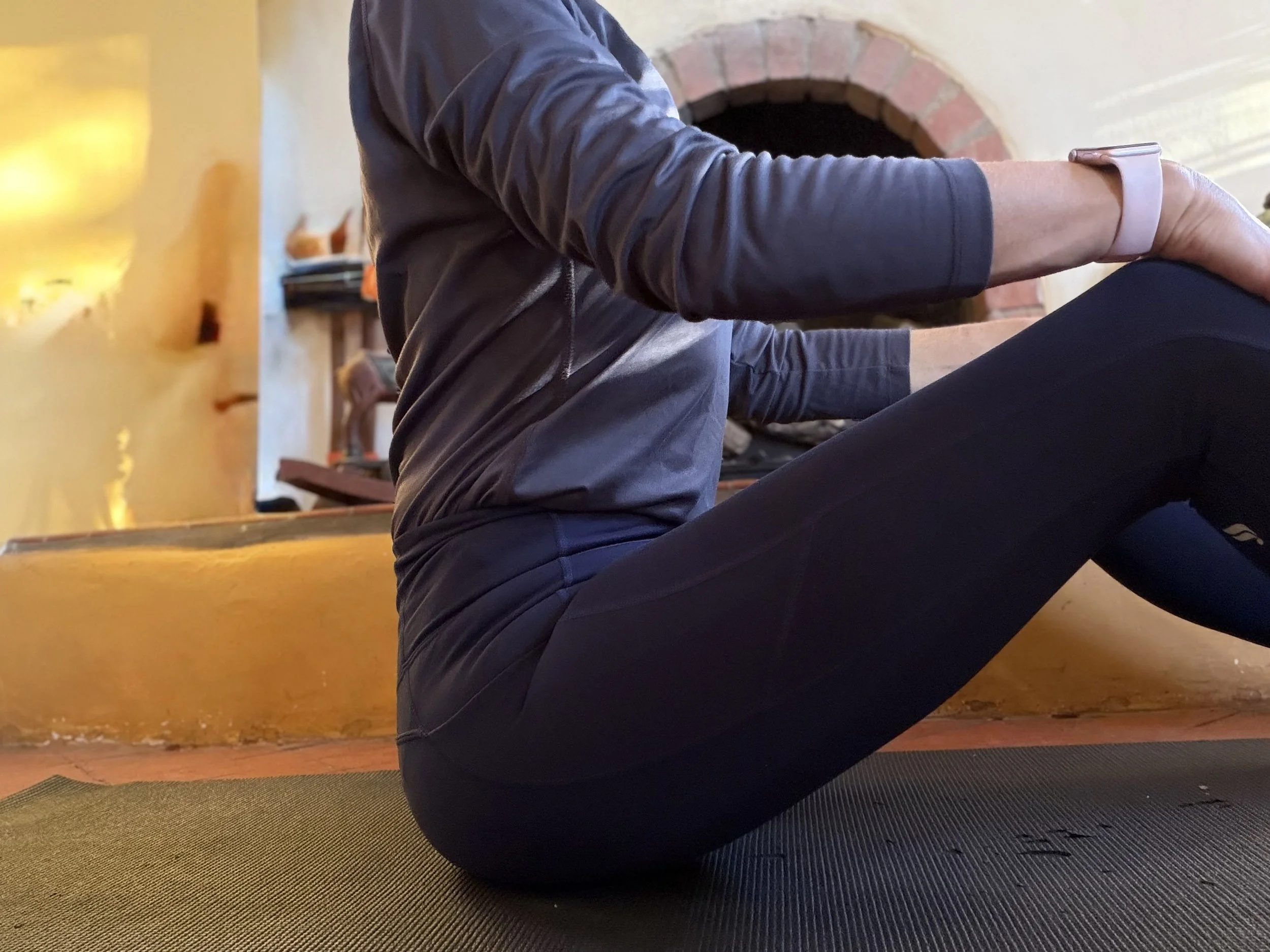
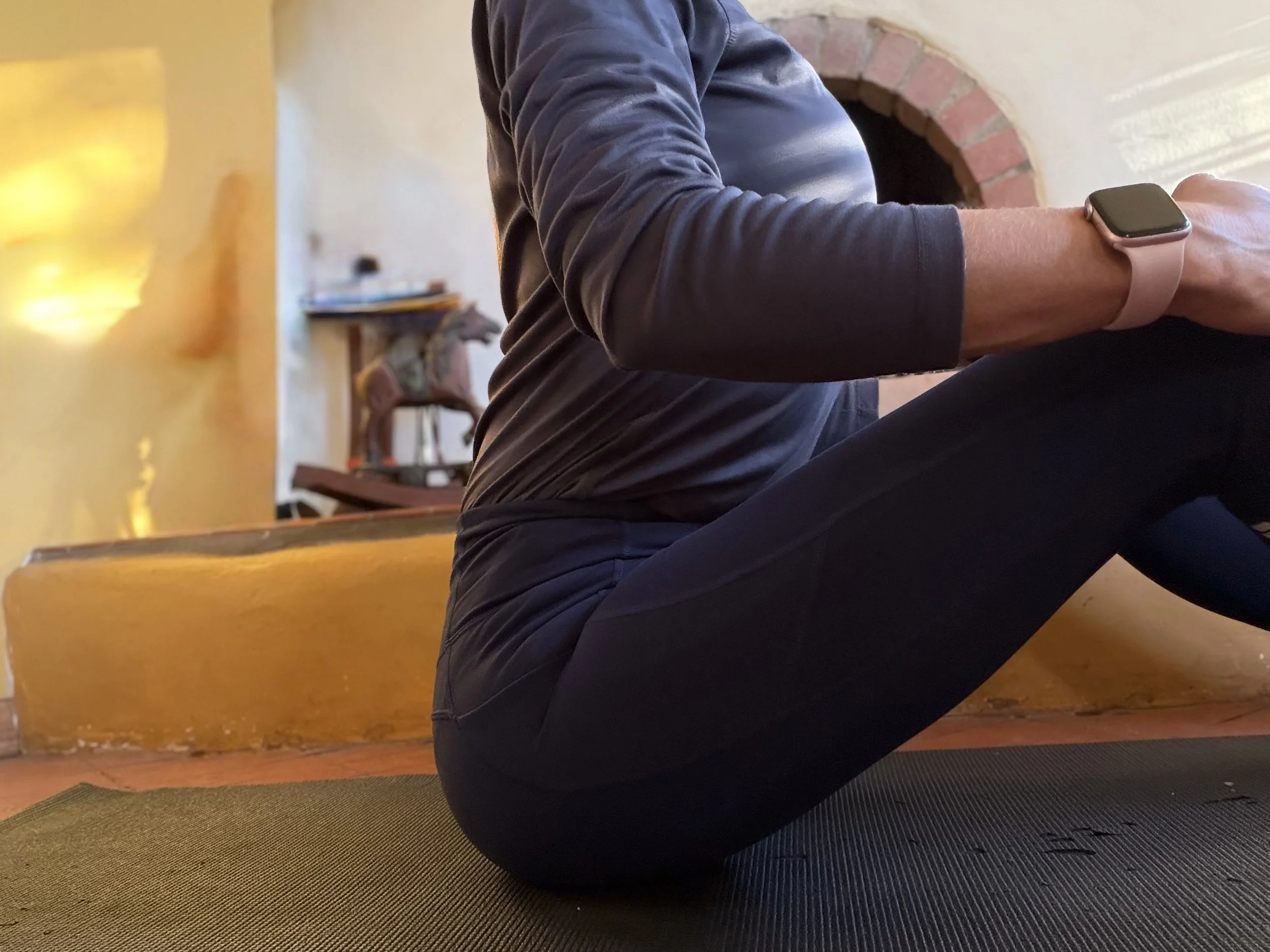
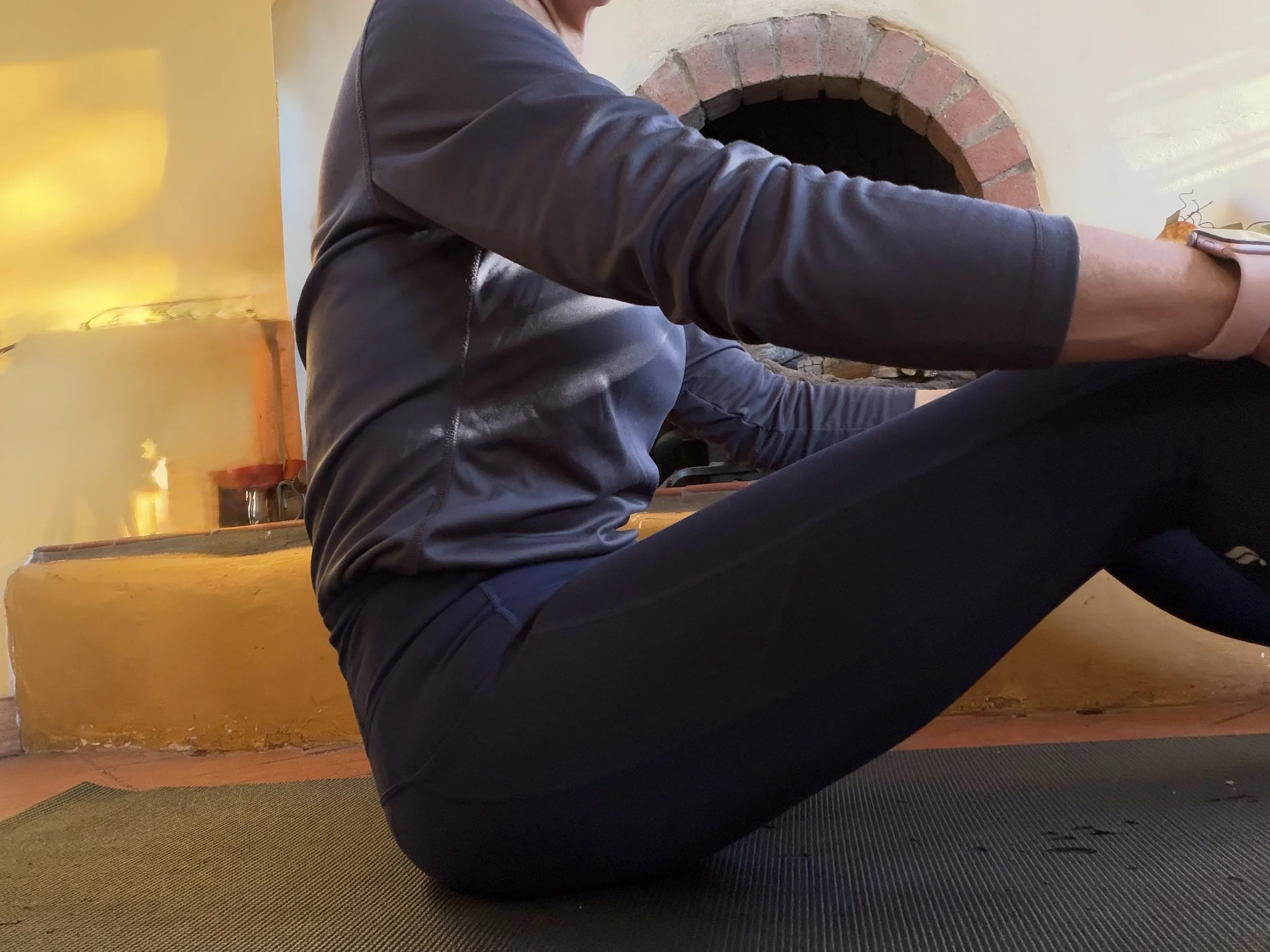
In the saddle, let the horse supply the movement. Find a quiet stretch at the walk. Keep your eyes up and notice how each side of your pelvis moves with your horse’s steps. Try the same easy exhale from the mat and feel what happens when your seat follows the walk. If your horse takes a slightly longer or shorter step, see if you can feel the change before your knees tighten. If you notice the grip a few strides later, that’s still something you can work with. Exhale and feel the next step.
On the mat, you can slow a movement down enough to recognize it. In the saddle, you get to use that awareness in real time, with a horse whose stride changes from one step to the next. Over many rides, you may find that when your horse picks up the trot, your breath keeps going, your hands stay steadier, and you have enough attention left to feel the horse underneath you. That’s what I mean by creating partnership through practice.