
In Cinderella, the slipper only has to fit long enough for everyone to know whose foot it belongs to. A farrier has a harder job. The shoe has to work when the horse puts weight on it, when they turn, and when they get up and walk across the pen the next morning. And by the next visit, the hoof will have grown and the horse may need something different.
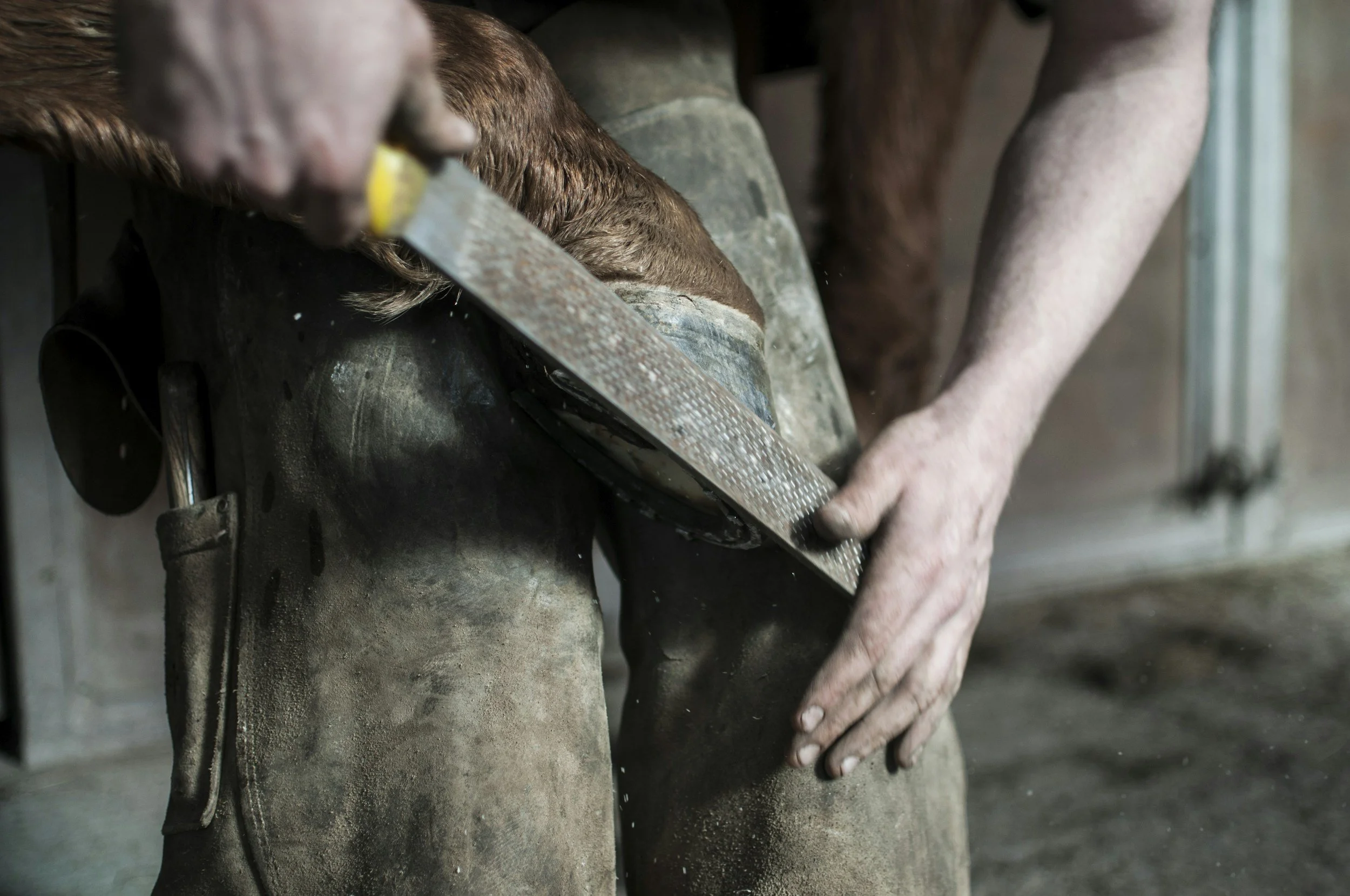
That’s what I think of when I hear the old saying “no foot, no horse.” When we’re rehabbing a horse, some of the most important work happens right there at ground level. What does this foot need to be more comfortable? Where does it need support? The veterinarian helps identify what’s injured and what needs protecting as it heals. The farrier figures out how to give that particular foot the support it needs. Sometimes that means changing the trim. Sometimes it means shaping a shoe, adding a pad, or making something from scratch.
We saw that with Guy after he was diagnosed with a navicular fracture and a white line infection. Our farrier team made him a custom shoe to help stabilize the foot while he healed. It was the kind of shoe you could stare at for a while trying to figure out how someone even thought to make it. What I appreciated most was watching people take the time to think through what his foot needed and come up with a way to give it to him.
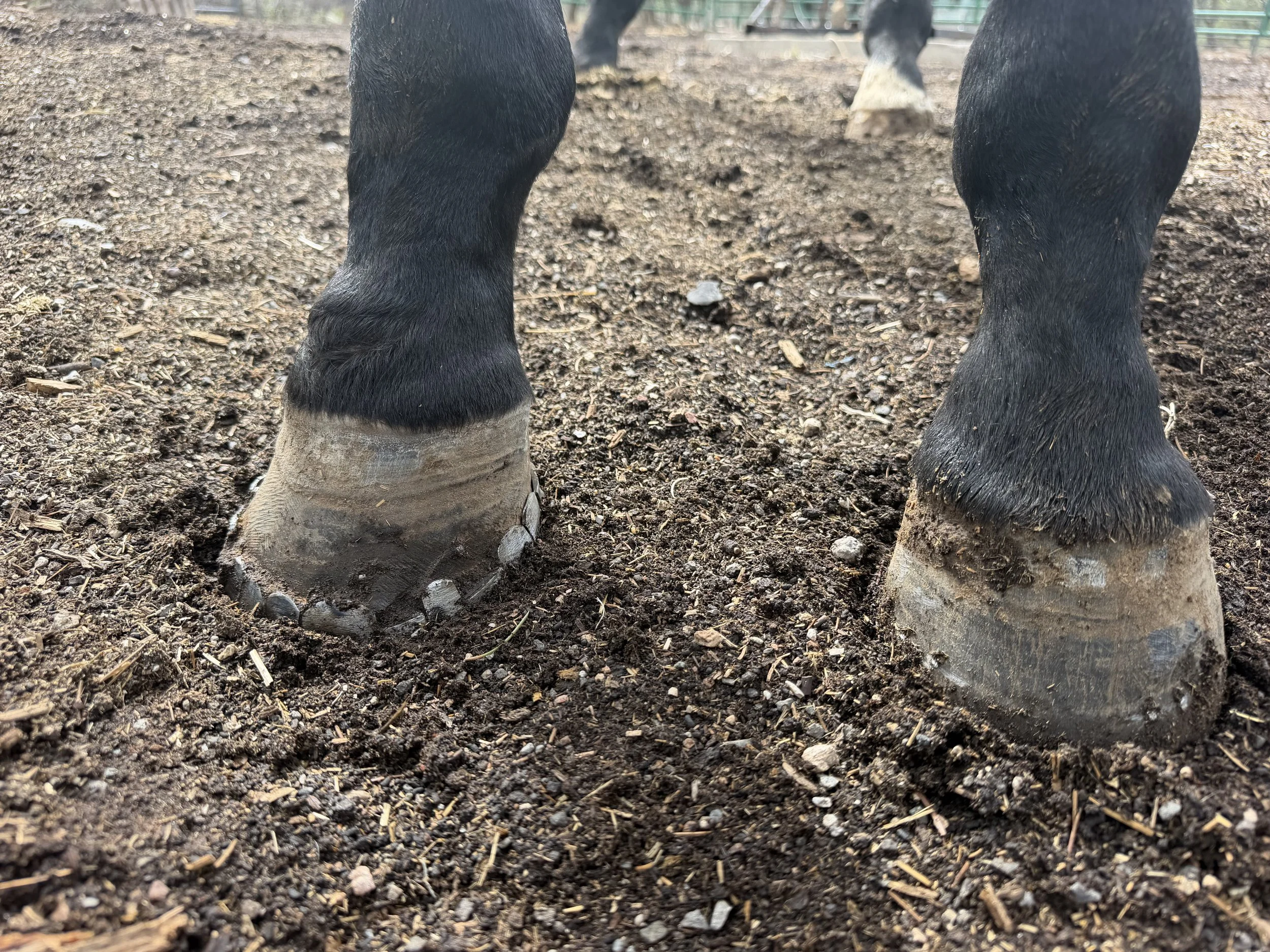
Finding the right setup can take a few tries. A shoe can look like a good fit in the farrier’s hands, and there’s still more to learn when the hoof goes back on the ground. How does the horse stand? How willing are they to take a step? What do we see in the days that follow? The people who care for the horse every day can bring those observations back to the farrier and veterinarian. Sometimes the next visit means a small adjustment. Sometimes it means trying a different application altogether. What helps at one stage of rehab may need to change as the horse heals and starts moving more.
I have a lot of respect for the farriers who can make something with their hands, watch the horse take a few steps, and see where they might make it better. We all want the day when a horse is ready to go back to doing more. In the meantime, there’s a lot to be glad about in seeing one walk across the pen a little more comfortably. That’s when I think about all the work that went into what’s on that foot.
Further reading
Adaption of Therapeutic Shoeing on the Rehabilitation Status of the Orthopedic Patient, AAEP Proceedings, p. 397