
More Than Rest: The Tools Behind Equine Rehabilitation
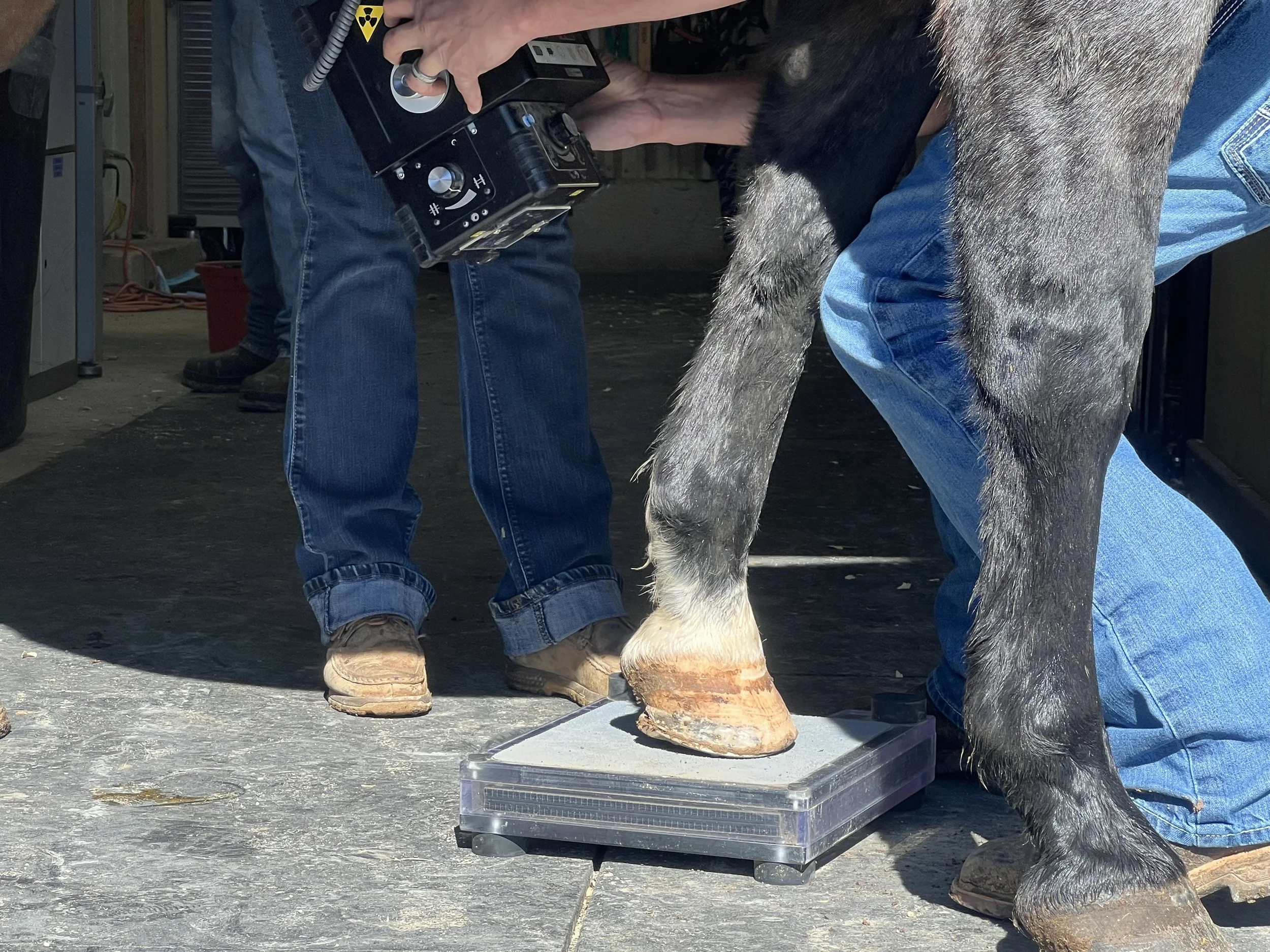
When a horse arrives at Enchantment Equine Rehabilitation Center, healing is rarely as simple as turning them out to pasture and waiting for time to do the work.
Many of the horses in our program come from demanding careers in racing, roping, barrel racing, and other performance disciplines. While these horses often possess exceptional athletic ability and willing minds, they may also carry the physical effects of years spent performing at a high level. Old injuries, scar tissue, chronic soreness, hoof imbalances, and compensatory movement patterns can all impact a horse's comfort and future potential.
Our goal is not simply to make horses comfortable. We strive to help each horse become as sound, strong, confident, and capable as possible for the next chapter of its life. Just as no two horses are alike, no two rehabilitation plans are identical. Every horse receives an individualized approach that may incorporate a variety of therapies, treatments, and training techniques designed to support recovery and long-term success.
Looking Beyond the Obvious
One of the most important lessons we've learned through rehabilitation is that injuries rarely exist in isolation. A horse recovering from a tendon injury may develop muscle tightness elsewhere in the body as it compensates for discomfort. A horse with chronic hoof pain may alter its movement patterns, creating strain in joints, ligaments, and muscles. Sometimes the visible injury is only part of the story. For this reason, rehabilitation requires looking at the whole horse rather than focusing on a single diagnosis.
Bodywork and Massage
Bodywork and massage are often among the first tools we incorporate into a rehabilitation plan. Years of compensation from old injuries can leave horses carrying significant tension throughout their bodies. Tight muscles and restricted movement patterns can limit flexibility, affect performance, and create discomfort. Through targeted bodywork, we can identify areas of restriction, encourage proper movement, improve flexibility, and help horses move more comfortably and efficiently.
Laser Therapy
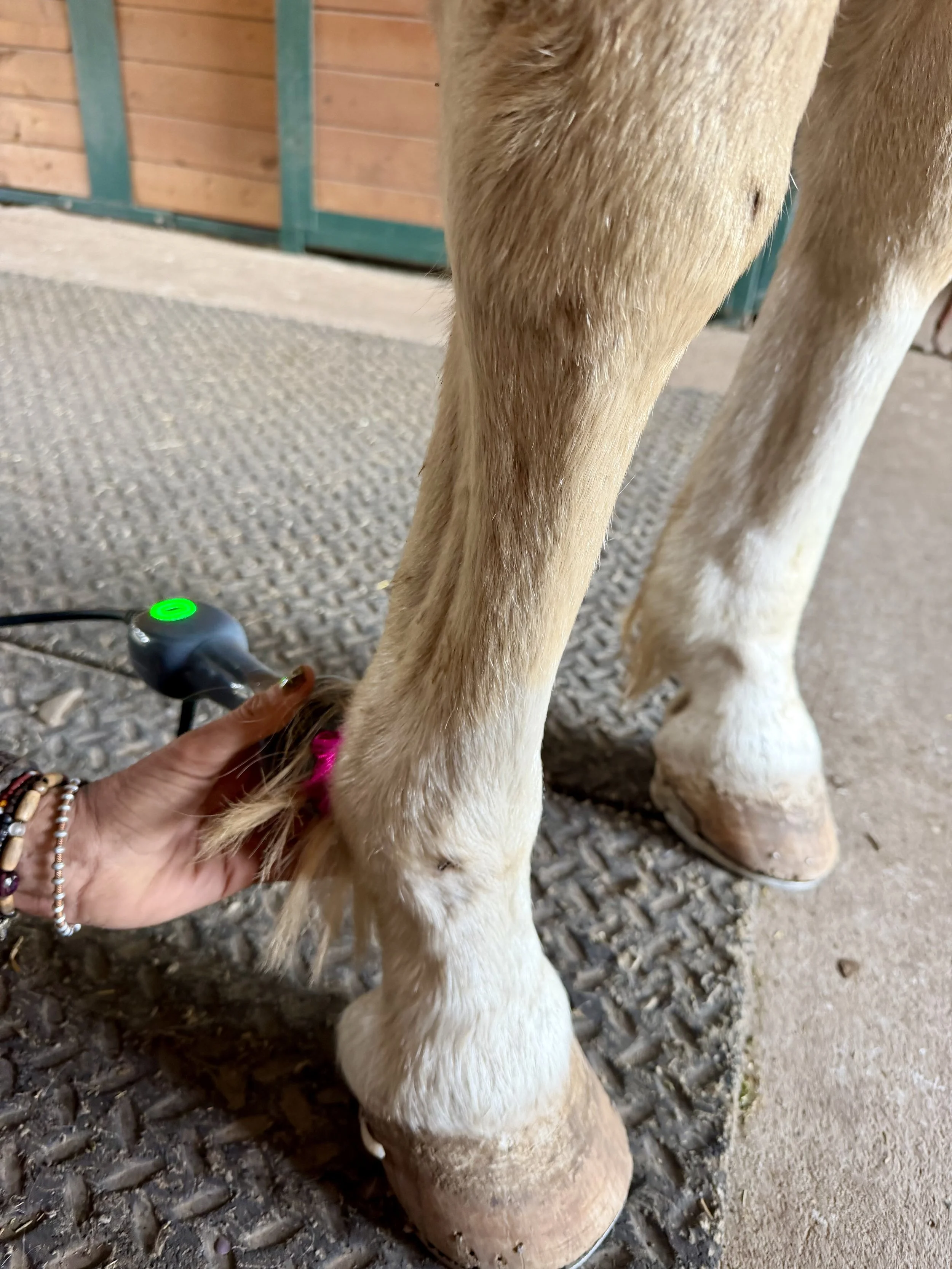
Laser therapy has become one of the most valuable tools in our rehabilitation program. By stimulating cellular repair and increasing circulation, therapeutic laser treatments can support healing in tendons, ligaments, muscles, and other soft tissues. The therapy is non-invasive and well tolerated by most horses. Donny, for example, continues to benefit from laser therapy as he recovers from a deep digital flexor tendon injury. Supporting healthy tissue repair is a critical part of helping him return to a comfortable and productive life.
Acupuncture
Acupuncture offers another valuable approach to rehabilitation. By stimulating specific points throughout the body, acupuncture can help improve circulation, reduce pain, release tension, and support the body's natural healing processes. For horses like Phoenix, who developed scar tissue from the explosive athletic demands of racing, acupuncture can play an important role in improving comfort, mobility, and overall function.
Red Light Therapy
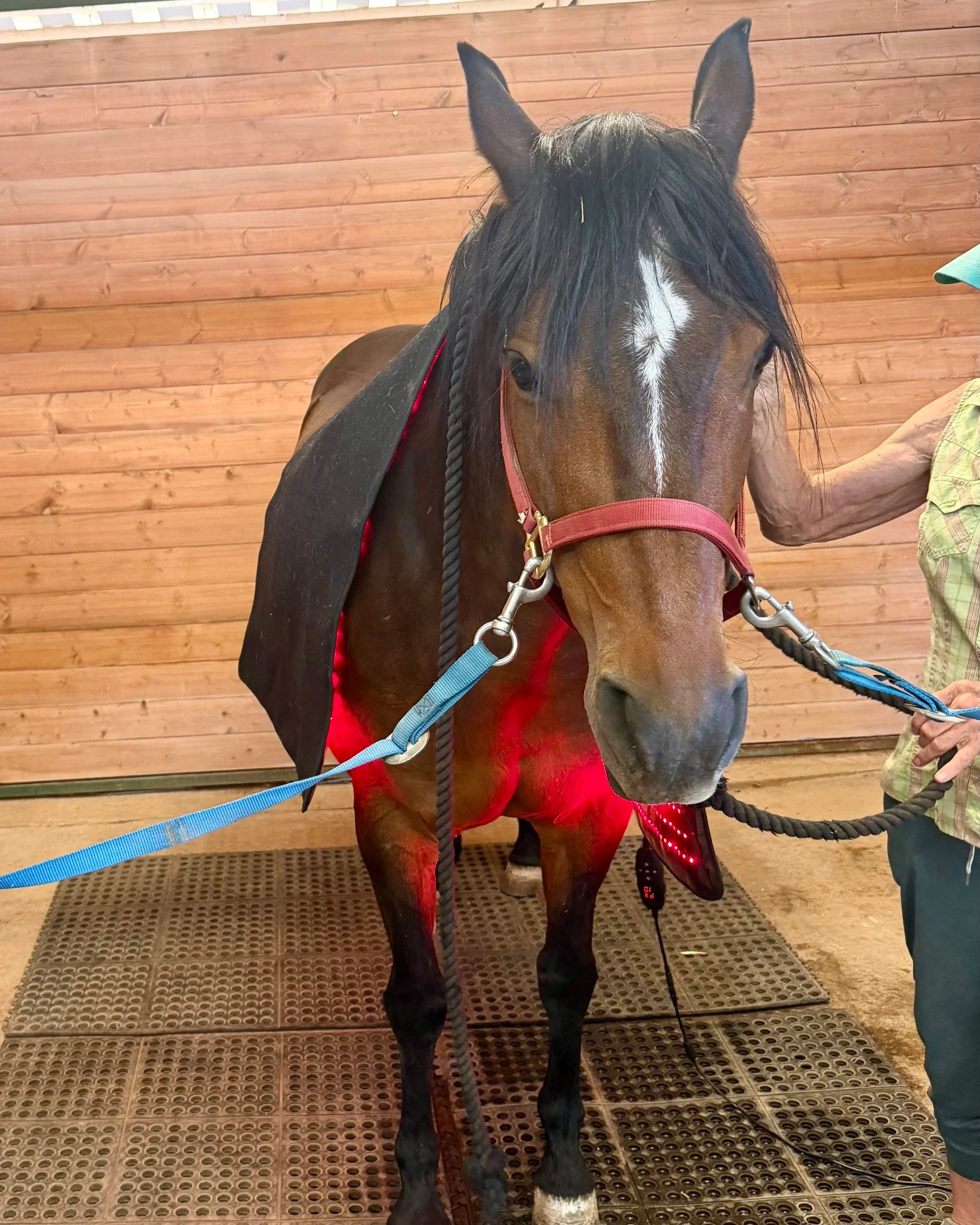
Red light therapy has become an increasingly popular tool for supporting tissue recovery and wellness. The therapy works by delivering specific wavelengths of light that may help improve circulation, reduce inflammation, and encourage cellular function. While not a replacement for veterinary care, it serves as an excellent complementary therapy and is often incorporated into our rehabilitation protocols.
Nutritional Support and Supplements
Healing begins from the inside out. Proper nutrition provides the foundation for every successful rehabilitation program. In addition to a balanced diet, many horses benefit from targeted supplementation designed to support specific needs.
Nutrients such as biotin can promote hoof health and growth, while specialized supplements may support joints, tendons, ligaments, muscles, and overall recovery. These building blocks help horses develop the strength and resilience needed for their future careers.
Veterinary Pharmaceuticals
When appropriate and under veterinary supervision, pharmaceutical support may also be incorporated into a rehabilitation plan. Treatments such as hyaluronate sodium can help support joint health, improve mobility, and manage inflammation in horses recovering from the physical demands of athletic careers. These therapies are used thoughtfully and strategically as part of a comprehensive approach to care.
The Missing Piece: Purposeful Training
Even the most successful medical rehabilitation is only part of the journey. As horses begin to heal physically, they must also learn the skills needed for their new careers. Whether the goal is becoming a trail horse, pleasure horse, or companion animal, structured training helps horses build confidence while strengthening their bodies. Obstacle work, varied terrain, group riding, exposure to new environments, and gradual conditioning all play a role in helping horses transition successfully into their next chapter.
More Than Rest
Perhaps the biggest misconception about equine rehabilitation is that healing happens through rest alone. Rest is important, but true rehabilitation is an active process. It requires patience, observation, adaptability, and a willingness to combine multiple tools and approaches to meet each horse's unique needs.
Every horse that enters our program teaches us something new. Through a combination of traditional veterinary care, complementary therapies, proper nutrition, thoughtful training, and plenty of patience, we strive to give each horse every opportunity to heal, thrive, and discover a meaningful future beyond its previous career.
Because every horse deserves more than retirement. They deserve a second chance to flourish.